How Much Does It Cost to Open a Liquor Store in 2026?
If you’re thinking about opening a liquor store, the first big question that comes to mind is:
“How much money do I actually need to open the doors and run the store safely for the first couple of months?”
Opening a new liquor store requires a significant upfront investment, with costs varying widely depending on location, store size, and state regulations.
Most independent liquor store owners in the U.S. should plan on roughly $200,000 to $600,000 in startup costs.
The exact figure depends on many factors.
A small shop with affordable rent and inexpensive, widely available licenses might get off the ground for around $50,000, while a store in a dense urban area, or a quota state with scarce licenses, can easily require $800,000 or more just to open the doors.
That’s more than a 10x swing between the low and high end, which is why you need to carefully account for all the factors that contribute to liquor store startup costs before you commit.
Below, we break down the most notable startup costs for opening an independent liquor store and provide ballpark ranges for each category, as well as guidance on budgeting for the first few months of operation.
1. Licenses and Permits
Before you can sell a single bottle, you must legally obtain all required licenses and permits, and these can be some of the highest upfront costs for a liquor store.
The total cost for licensing varies enormously by state and local laws.
In the U.S., alcohol sales are tightly regulated at the state (and sometimes local) level, and the cost of a liquor license can range from a couple of hundred dollars in lower-demand areas to tens or even hundreds of thousands of dollars in quota states, where the number of liquor licenses is capped and new owners often have to buy an existing license on the open market.
For example, in some low-fee states like Idaho, a basic beer-and-wine license can cost as little as $50–$100 in state fees.
On the other end of the spectrum, in quota states like New Mexico, full retail liquor licenses commonly go over $300,000 and have even sold for close to $1 million in recent years.
However, for most independent liquor store owners, the expected price for a license and permits will usually be much less, around several thousand dollars.
In addition to the alcohol license, you’ll need a general business license and likely some local permits. These may include a local business operating license, sales tax permit, and zoning permits
These permits are far cheaper than the liquor license itself, but they can still add up to several hundred or a few thousand dollars in fees. Some jurisdictions bundle these into one process, and the overall range that owners typically spend is:
- $500–$2,000 if they handle most paperwork themselves
- $2,000–$5,000 if they lean on an attorney or accountant
Once you add up the liquor license, business license, and all required local permits, liquor store owners can expect to spend anywhere from a few thousand dollars (often in the $3,000–$10,000 range in lower-fee states) to tens or even hundreds of thousands in strict quota states.
2. Location and Real Estate Costs
One of the biggest upfront expenses for a liquor store is securing a suitable retail space.
For most independent liquor stores, you’re looking at 1,000–5,000 sq ft in a neighborhood, strip center, or busy street.
Typical rent ranges vary a lot by market, but to give you a realistic ballpark, here’s what many liquor store owners see:
- Smaller towns/lower-cost areas: $1,500–$3,000 per month
- Suburban/mid-range markets: $3,000–$7,500 per month
- Busier urban locations: $7,500+ per month
Most landlords will ask you to put down more than just the first month before you move in.
In most cases, you’ll need to cover the first month’s rent plus a security deposit, which is often the equivalent of another month, and sometimes even more if the landlord sees your business as higher risk.
So, if your rent is around $4,000 per month, that means you’re likely looking at $8,000–$12,000 upfront just to secure the lease and get the keys in your hand.
When you add all this up, rent quickly becomes a significant line item in your startup budget, and you need to prepare $20,000–$90,000 in rent for the first year of operations.
3. Renovations, Fixtures, and Signage
Once you have the space, you need to turn it into an actual liquor store.
That’s why the space's setup is also a major factor to consider. When choosing a space to rent, you want it to be as close as possible to a functional retail layout (shelves, counters, basic utilities).
Unless you rent a space that was previously also a liquor store, you will need to make at least some basic changes to turn it into a fully operating liquor store.
That usually means:
- Painting and cosmetic work
- Building or upgrading a checkout counter
- Adding shelving and wall units
- Installing or upgrading lighting
- Some electrical work
- Exterior and interior signage
If the space only needs cosmetic work like paint, minor repairs, and basic setup, you might spend around $8,000–$25,000 to get it ready.
But if you decide to further customize your shop and invest in new flooring, extra electrical work, custom shelving, and nicer finishes, the budget can easily move into the $25,000–$75,000+ range.
Shelving and fixtures alone often cost between $5,000 and $20,000, depending on whether you buy new, find used equipment, or keep what the previous tenant left behind.
All together, most independent liquor store owners end up spending somewhere in the ballpark of $15,000–$70,000 on renovations, fixtures, and basic signage, with more customized or high-end build-outs easily pushing that total higher.
4. Initial Inventory Investment
We mentioned several investments that could exceed $50 000 in startup costs, but those are extremes. What's likely to take the single largest chunk of your upfront investments is stocking your inventory
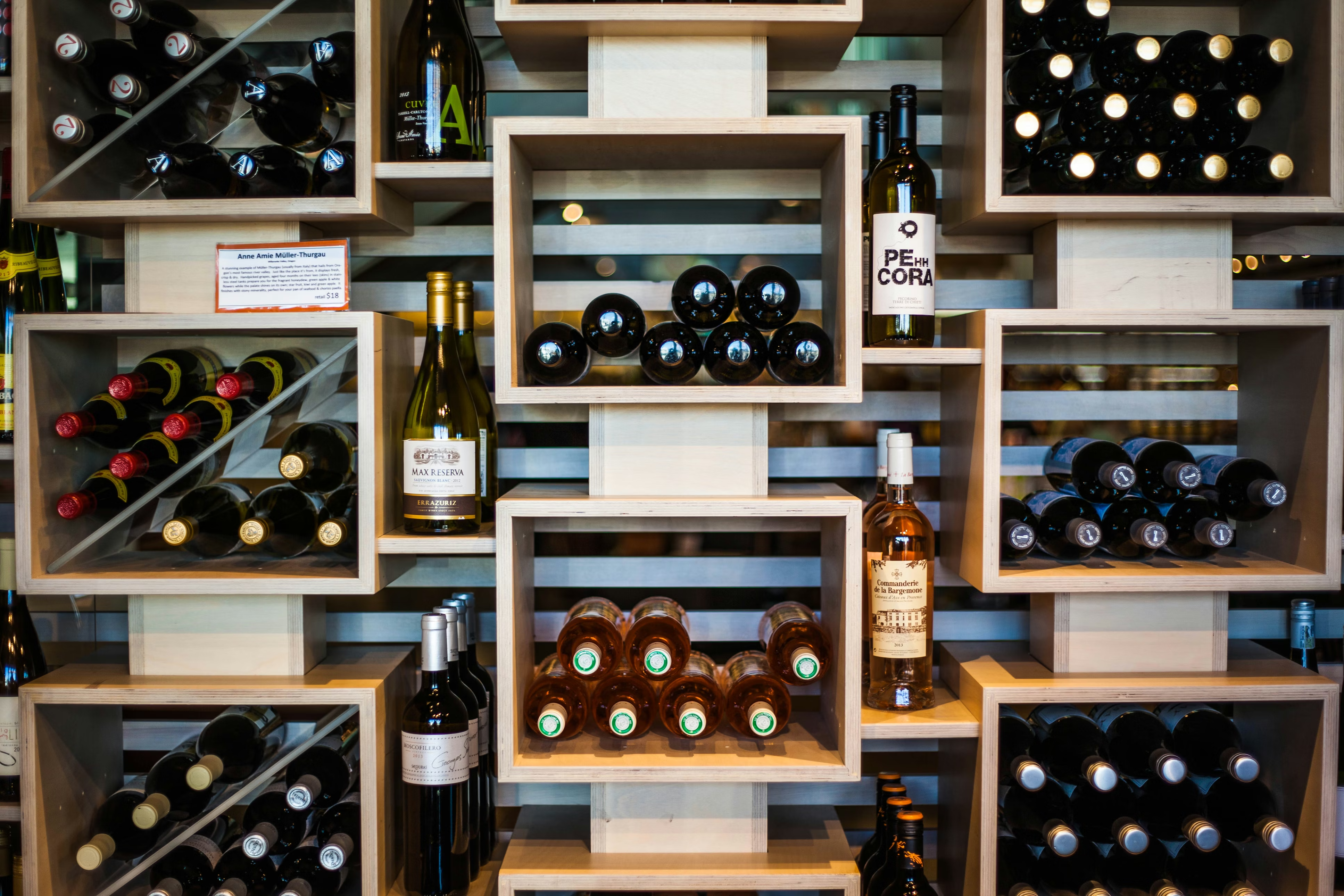
Liquor, wine, and beer wholesale costs add up quickly, and customers expect a decent selection when they walk in.
The exact amount you need for initial inventory depends on your store’s size and the variety you plan to offer, but it easily reaches tens of thousands of dollars in even a small shop.
Most liquor store owners should plan to spend $100,000-$500,000 on their first stock order.
If you are opening a smaller wine or beer specialty shop, you might get by with less – perhaps $75,000-$100,000 in starting inventory for a small store or limited-focus shop.
On the other end, a large-format liquor store or one aiming to carry a vast selection could invest $1M or more in inventory from day one.
It’s wise to hold back a portion of your inventory budget (say 10–20%) to quickly reorder fast-selling items once you see what moves in the first few weeks.
Keep in mind that alcohol inventory ties up a lot of capital (bottles sitting on shelves represent locked cash flow that does not turn into revenue until they sell), so plan carefully which items you’ll carry.
{{DEMO_CTA="/components"}}
5. Store Equipment and Technology
You don’t need every fancy gadget to open your doors, but you do need a few core pieces of equipment.
The most important tech decision you’ll make is your POS system. A modern POS can act as the central hub of your business, connecting in-store, eCommerce, inventory, ordering, marketing, promotions, and more, so you can protect your margins and run the store as efficiently as possible.
You want a liquor-specific POS that can handle:
- Cases, packs, and singles from the same product
- Bottle deposits (if your state requires them)
- Age verification at checkout
- Advanced reports on sales and inventory
- State and local tax laws so that you are compliant in-store and when you deliver orders
A complete POS solution can significantly reduce your tech costs by covering in-store checkout, inventory, online sales, delivery integrations, and payment processing under a single monthly fee.
Instead of spending around $1,000 per month (about $12,000 per year) on separate systems, consolidating everything into one platform like Santé POS can save a 2-register liquor store over $7,000 annually.
Beyond the POS, you’ll need a few other essentials:
- Refrigeration and coolers: Most customers expect cold beer, ready-to-drink cocktails, and wine. Commercial glass-door coolers typically cost a few thousand dollars each, and a walk-in cooler for larger stores can run well over $10,000. If buying new is too expensive, you can often lease coolers instead and trade a high upfront cost for a smaller monthly payment.
- Security systems: Liquor is high-value and easy to steal, so cameras and alarms aren’t optional. A basic camera system for a small store costs $2,000 - $10,000. Many owners also invest in security tags for bottles that cashiers remove at checkout, along with door sensors that trigger an alarm if someone tries to walk out without paying.
- Other equipment: Carts and baskets, a back-office computer, label or price-tag printers, a cash drawer, and simple tools like hand trucks for moving cases. None of these line items is expensive on its own, but together they usually add up to a few thousand dollars more.
When you put it all together (POS, refrigeration, security, and basic store equipment), most new liquor store owners spend around $20,000–$45,000 or more on equipment and technology.
6. Insurance, Utilities, and Other Operating Costs
Beyond the big-ticket items above, there are various smaller startup costs to account for, many of which will also be ongoing monthly expenses once you open.
It’s important to account for these in your opening budget so you’re not caught off guard.
Business Insurance:
Liquor stores need insurance coverage from day one. At minimum, you’ll want general liability insurance (to cover accidents or injuries on the premises) and property insurance (for your building contents/inventory in case of theft, fire, etc.).
Many opt for a Business Owner’s Policy that bundles these.
Insurance premiums vary by location and coverage limits, but a typical liquor store might pay around $100–$200 per month for basic coverage. That suggests setting aside about $1,000–$2,500 per year for insurance.
Utilities:
Utilities can be significant, especially electricity for all the lights and coolers. On average, expect perhaps $500–$1,000+ per month in utilities for a retail store. (A large store with many refrigerators in a hot climate could exceed this.)
When budgeting to open, ensure you have deposits and a few months’ worth of utility bills covered. A rule of thumb is about $2–$3 per square foot in annual utility.
Initial Supplies and Miscellaneous:
Don’t forget initial office supplies, point-of-sale supplies, cleaning supplies, and small one-time fees.
For example, you may need to buy a bulk of receipt paper rolls for your POS, pricing labels/tags, a cash drawer fund (the starting cash in the register), cleaning equipment, a first aid kit, etc.
Individually, these aren’t huge, but you’re looking at a few hundred to a thousand dollars on miscellaneous setup items to get the store ready.
It’s wise to set aside a small buffer in your budget for these kinds of unplanned expenses – something always comes up (maybe you need an electrician to add outlets for your coolers, or a last-minute repair before opening).
Marketing and Initial Advertising:
While marketing is often viewed as an ongoing expense, there may be upfront costs to properly launch your store.
This could include creating a logo and signage design, printing banners or flyers for your grand opening, setting up a basic website or social media pages, and maybe running a few local ads or promotions to draw in the first customers.
Initial branding and marketing costs for a small business can run a few thousand dollars, around $1,000–$5,000 on branding (logo, website, basic marketing).
You might also offer grand-opening specials or free samples (within legal limits), which are part of marketing.
While you don’t need a huge advertising blitz for a neighborhood liquor store, allocating some budget (perhaps a couple percent of your startup cost, or a few thousand dollars) to marketing will help ensure people know you’re open.
Overall, you’re looking at roughly $8,000–$20,000+ in total for insurance, utilities, initial supplies/miscellaneous, and upfront marketing in your first year.
7. Staffing and Operational Expenses (First 6 Months)
If you plan to hire employees to help run the liquor store, you should include the initial payroll costs in your budget and ensure you have enough working capital to pay salaries until the business becomes self-sustaining.
You do not want to open the doors and immediately start worrying about how to cover next week’s paychecks.
Many independent liquor stores start with a small staff, often the owner plus 1–3 employees, depending on store size and operating hours.
Retail wages fall between $12 and $18 per hour, which means that one full-time employee working around 150 hours a month will cost you roughly $2,500 to $3,000 per month once you include payroll taxes and basic fees.
It’s wise to have at least a few months of wages covered in your initial funding.
If your monthly operating costs (rent, utilities, inventory reorders, staff, etc.) are, say $10,000, that means $60,000 reserved just for working capital.
Total Startup Cost Summary
If we assume you’re not buying a $200,000+ quota license or renting a massive space in the center of New York, a more realistic range for most independent liquor stores is about $200,000 to $600,000 in startup costs.
That’s the money you need to safely start and operate your store for the first six months, giving you time for things to settle, learn your customers, and put the business on stable feet.
Frequently Asked Questions
Q1: Is a liquor store a profitable business to get into?
It can be, but margins vary a lot by category and how efficiently you run the store. Spirits typically carry better margins than beer, and how you manage pricing, shrinkage, and promotions has a bigger impact on your bottom line than most owners expect going in.
Q2: Is it cheaper to buy an existing liquor store than start one from scratch?
Sometimes, but not always. Buying an existing store often means you skip the license application process (you're transferring an existing license instead), and you may inherit fixtures, coolers, and an established customer base. That can save tens of thousands of dollars in build-out and licensing costs.
On the other hand, you're paying a premium for "goodwill" and existing inventory, and you may inherit outdated equipment, a bad lease, or a location that's underperforming for a reason.
The right call usually comes down to whether you're buying a functioning business or just a liquor license with a store attached.
Q3: How long does it take for a new liquor store to become profitable?
Most independent liquor stores take anywhere from 6 months to 2 years to become consistently profitable, depending on location, competition, and how quickly you build repeat customers.
The first few months are typically about breaking even on operating costs while you figure out what actually sells in your market.
Q4: Can you get a loan or financing to open a liquor store?
Yes, though it's harder than financing many other small businesses because lenders view alcohol retail as higher risk.
Options include SBA loans, equipment financing for coolers and POS systems, inventory financing, and in some cases seller financing if you're buying an existing store.
Most lenders will want to see a solid business plan, some personal capital already invested, and in quota states, proof that you actually have (or can get) a license.
Q5: What's the biggest hidden cost first-time owners underestimate?
Working capital. Owners often budget carefully for licenses, rent, and inventory, but underestimate how much cash they need to cover slow weeks, seasonal dips, and inventory reorders before the store hits a steady rhythm.
Running out of working capital in month three or four is a more common failure point than any single line item above.
Do I need the full $200,000+ upfront, or can I open smaller and scale up?
You can absolutely start smaller. A tightly focused shop (beer and wine only, a smaller footprint, a lower-fee state) can open on a much smaller budget and expand inventory and selection as sales data shows what customers actually want.
Many owners intentionally underbuy on inventory in year one and reinvest profits into expanding their selection.
Your submission has been received!