How to Configure Your Liquor Store Layout to Sell More
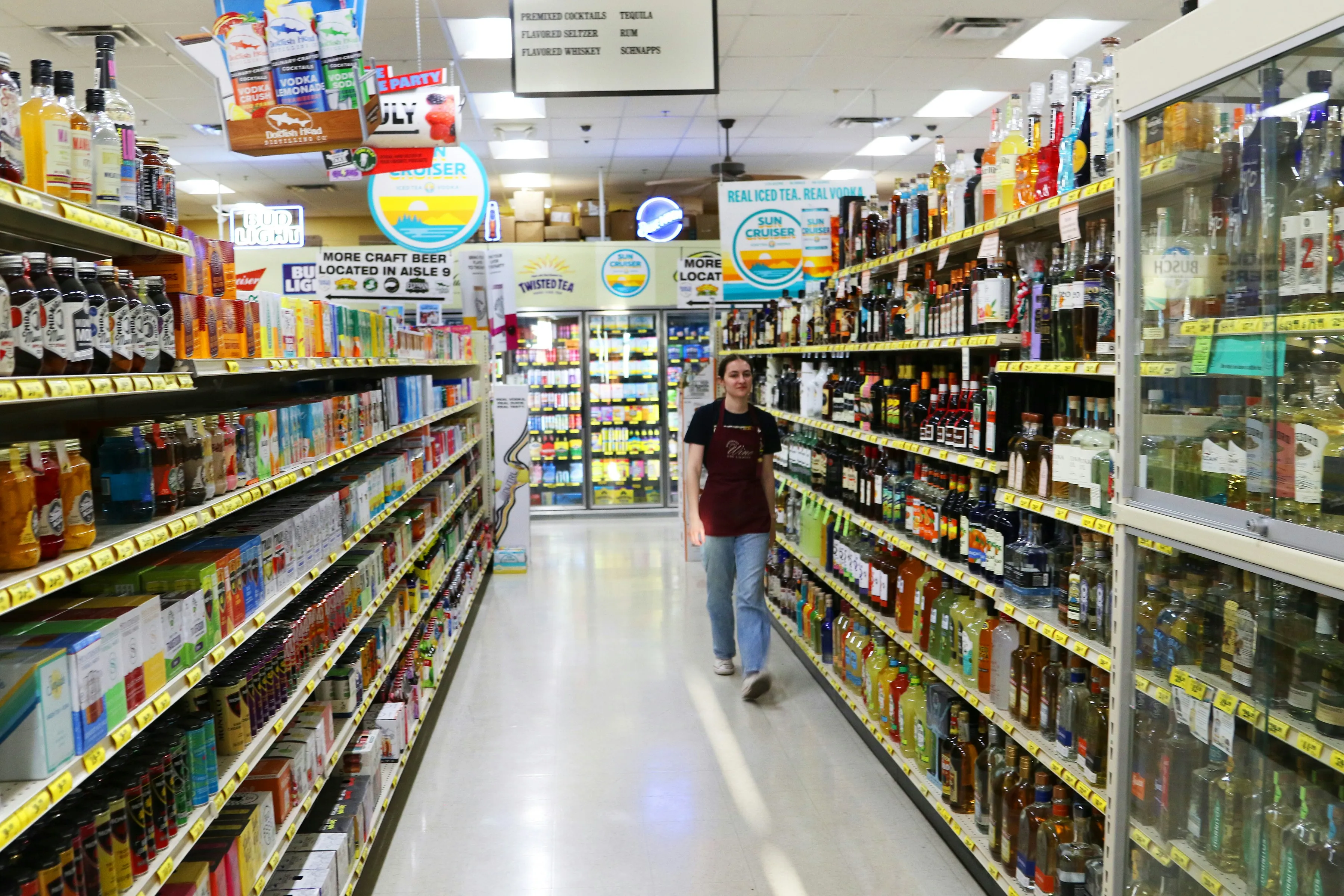
A liquor store layout could be thought of as a sales strategy made into a physical space. Where you place products, how you organize sections, what goes on your endcaps, and how clearly you guide customers through the space all have a direct effect on what they buy and how much they spend.
These changes work inside the customer's subconscious, so it's up to you to create a layout that nudges them in the right direction.
This guide covers the principles and decisions that matter most.
How Customers Move Through a Liquor Store
Before you can place a product strategically, you need to understand how customers typically move through a new space.
Most shoppers in a retail environment drift to the right when they walk in, travel counterclockwise around the store, and slow down near displays that create a visual break in an otherwise uniform aisle.
What this means is that the right side of your store, the wall or section a customer naturally turns toward first, gets more attention than the left. If you've ever noticed customers gravitating toward a particular section without any obvious reason, this is usually why.
Where to Place Products
High-margin products need placement that gives them a fair shot, which means eye level, visible from the main traffic path, and positioned near products that naturally lead to them.
Eye level on the shelf, roughly between chest height and the top of the head, is where customers look first and spend the most time. This is where you want spirits with strong margins, craft products where the story justifies the price, and bottles where the packaging alone can close the sale if someone lingers for a moment.
Below eye level is where you put volume products: the handles, the value cases, the everyday items customers are coming in for, regardless of placement. These products don't need help getting found, because they sell on price and familiarity.
Above eye level works for products that benefit from being discovered, specialty bottles, limited releases, and higher-end items, where shoppers who are already engaged will look up. This zone rewards the deliberately curious customers rather than the customer who only grabs and goes.
Common mistake: Organizing by category alone
Don’t stock your shelves by category logic alone (for example, all whiskey together, all gin together) without thinking about which items within that category should get prominent placement versus which ones are there because they have to be.
Category organization matters for navigation, but margin-conscious placement matters for revenue. Both things are true at once, and your layout should reflect both.
Where to Place Endcap Products
Endcaps are among the most valuable real estate in your store. These high-visibility displays create a natural pause in the shopping path.
They are one of the few spots in your store where a product gets a customer's full attention before they've already committed to an aisle, and that moment of undivided attention can be hard to get anywhere else on the floor.
A well-planned endcap does one of three things:
It moves a high-margin product by giving it visibility it wouldn't get on the shelf - A bottle with a strong margin but a position in the middle of a crowded whiskey aisle can perform very differently when it's front and center at an endcap with a simple shelf talker explaining why it's worth picking up.
It drives a bundle purchase - Spirits paired with a mixer, a wine paired with a recommended food, or a beer variety pack next to a cooler bag. The customer who may have come in for one item ends up leaving with two.
It creates urgency around a limited or seasonal product - Scarcity is a legitimate driver of purchase decisions. If a product is truely limited, the endcap is where that message lands best.
Common mistake: Giving away prime endcap space
What you should not do is let distributor incentives dictate your endcap decisions. Distributors will offer display support, POS materials, and sometimes financial incentives to feature their products prominently.
That's not inherently an issue, but if you're giving prime endcap real estate to a product that doesn't perform or doesn't fit your customer base, that’s when it actually turns into one.
{{DEMO_CTA="/components"}}
How to Prevent Theft Through Store Layout
Layout isn't only a sales tool, it's a loss-prevention tool.
Keep your center aisles low, ideally below eye level, and save your tallest shelving for the perimeter walls. Do this and a staff member standing at the register can see clear across the store instead of losing half the floor behind a wall of product.
If your store's shape leaves you with a dead corner no matter how you arrange shelving, a convex mirror or a low-risk, high-volume category (think mixers, ice) in that spot does more good than a locked cabinet ever will.
Your checkout counter deserves the same intentionality. Positioning it near your single point of entry and exit means every customer passes your staff twice, once coming in and once going out, which does more for shrinkage than any camera.
How to Use Signs in Your Liquor Store
Signage in a liquor store serves two distinct purposes, and most stores only do one of them well.
The first purpose is navigation. Clear category signs at eye level or above, visible from the entrance and from the main aisle, reduce friction and keep customers from getting frustrated.
The second purpose is persuasion. Signs help urge customers to decide once they're in front of a product. Shelf talkers, tasting notes, staff picks, food pairing suggestions, and award callouts all serve this function.
Most people walking into a liquor store don't have strong opinions about which bottle they're leaving with, and a well-placed shelf talker with a short, confident description is often all it takes to make that decision for them.
Use Purchasing Data to Decide Where to Stock Items
Your sales data tells you which products move fastest, which categories have the highest basket attachment rates (meaning customers who buy from that category also buy something else), which items get purchased in combination, and which high-margin products are underperforming relative to their placement.
If a product is at eye level, on a main aisle, and still moving slowly, the problem might be the product—or it might be the price point, the lack of signage, or the fact that nothing near it creates a reason to pick it up. Sales data gives you the evidence to tell the difference.
This is where your POS system becomes a layout tool, not just a checkout tool.
When your point of sale is tracking what's selling and surfacing that information clearly, you can look at underperforming shelf positions and ask real questions: Is the product wrong, or is the placement wrong? Which products are consistently bought together, and are they stocked near each other? What does the data say about which categories drive basket size?
Santé POS is built specifically for liquor stores, which means the data it captures and surfaces is organized around the decisions liquor store owners actually need to make.
Santé’s sales reporting shows you how categories and individual products are performing over time, so you know which sections of your store are earning their floor space and which aren't.
Santé’s inventory tracking reflects what's moving and what's sitting, giving you a clear picture of where your money is tied up and where it's turning over.
Santé’s smart reordering surfaces stock levels and trends in one place, so you're not making replenishment decisions based on a gut feeling about what's been selling.
Santé’s AI-powered invoice receiving means your inventory is accurate from the moment a shipment arrives, so the data you're making layout decisions on isn't compromised by receiving errors.
If you're ready to see what Santé can do for your store, schedule a demo, and we'll walk you through it.
Your submission has been received!