How to Stop Underage Sales In Your Liquor Store
Underage drinking in the United States has declined significantly over the past two decades, but that doesn't mean the responsibility of prevention has gotten any lighter for liquor store owners.
Selling alcohol to a minor can result in fines ranging from several hundred to tens of thousands of dollars depending on the state, and repeat violations can cost you your license entirely.
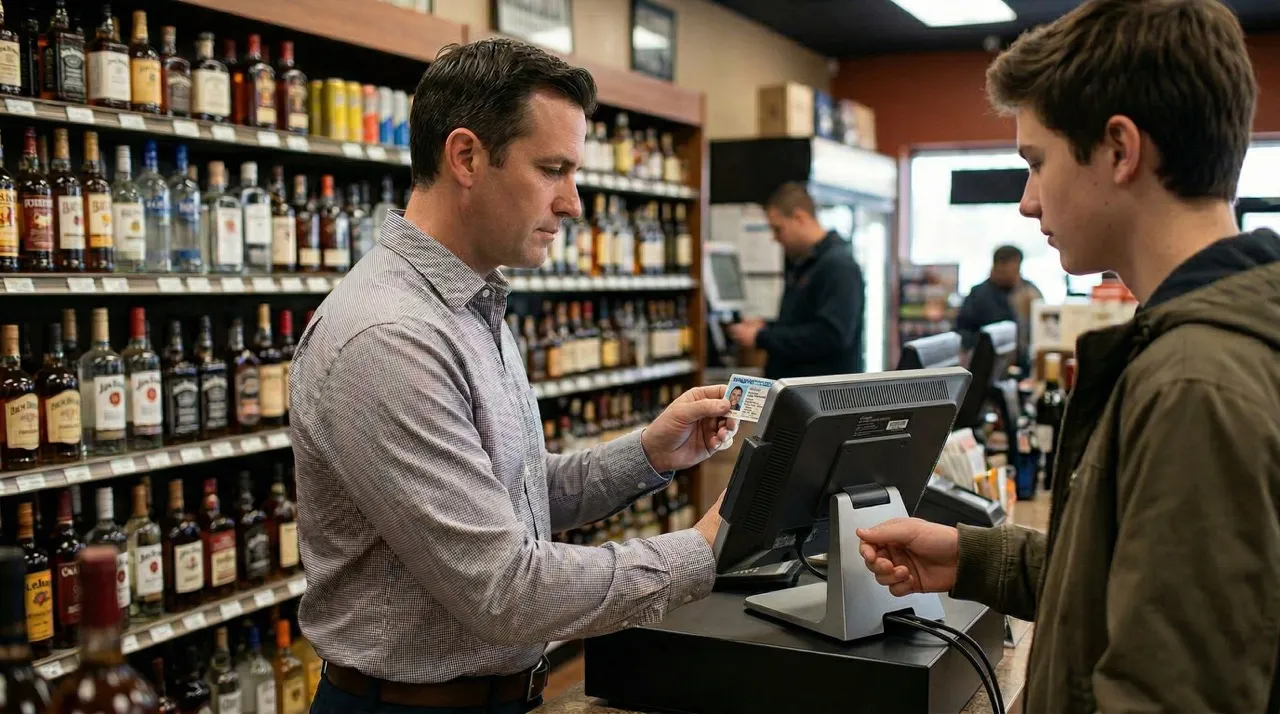
Checking IDs is something that must be done without exception, but in practice, it doesn't always happen. And when it doesn’t, the consequences fall on you.
In this article, we’ll break down how to prevent the kind of mistakes that lead to fines, violations, and lost licenses.
The Legal Consequences of Selling to Minors
The penalties for selling alcohol to a minor vary significantly by state, and in some cases, they're more serious than most store owners realize.
In most states, a first-offense sale to a minor is a misdemeanor, carrying fines that typically fall somewhere between $500 and $2,000 for the business, but several states go further than that.
In Texas, a first offense can result in a fine of up to $4,000 and up to a year in jail for the employee involved.
In California, a retailer's first offense carries a fine of up to $1,000 and can trigger a 25-day license suspension.
Some states, including Texas, California, Florida, and Illinois, also impose what's known as dram shop liability, which holds retailers civilly responsible if a minor they sold alcohol to later causes injury to a third party. This opens the door to lawsuits that go well beyond regulatory fines.
The bottom line is that the legal framework is not uniform, but the exposure is universal. No state treats underage sales as a minor infraction, and the combination of fines, license risk, and civil liability makes this one of the highest-stakes compliance issues in liquor retail.
How to Prevent Underage Sales In Your Liquor Store
Train Your Staff Thoroughly
Good training doesn’t just explain the rules, it prepares staff for the situations where those rules get tested. In other words, training should cover not just what to check, but how to handle the situations that create hesitation.
For example, a group of people where one is clearly buying for the rest, or a customer who pushes back when asked – these are the moments where staff without clear guidance tend to make the wrong call.
Giving staff clear, practical ways to respond is key, instead of only telling them what’s allowed or not allowed. What should they say when someone gets defensive? When should they refuse a sale, and how do they do it without escalating the situation? These are the details that make the difference in real interactions.
It also helps to standardize how these situations are handled across your team. When everyone is trained the same way, decisions become more consistent, and staff feel more confident standing by them instead of second-guessing in the moment.
Over time, that consistency turns into a habit. Staff don’t have to stop and think through every situation, they already know how to handle it, even when the pressure is on.
{{DEMO_CTA="/components"}}
Set Up Age Verification for Online Liquor Sales
More liquor stores are selling online than ever before, and it's a great way to reach more customers and grow revenue.
But since online purchases are effectively anonymous, they can be abused by underage buyers if the right safeguards aren't in place.
The simplest and most important step is making sure your ecommerce platform requires age verification before a customer can browse or buy.
From there, the same rules apply as in-store. If you offer pickup, check the ID of whoever comes to collect the order. If you deliver, require a signature and ID check at the door.
Make ID Checks Part of the Checkout Process with Santé POS
As mentioned before, preventing underage sales is largely about what actually happens at the register during a busy shift. No matter how well your staff is trained, mistakes can still happen, and in this case, those mistakes can be extremely costly.
Santé POS is a modern, purpose-built POS system for liquor stores with age checks built directly into the checkout flow. Alcohol transactions can trigger required prompts, making age confirmation a standard part of alcohol transactions.
Because this process is built into the system, it runs the same way every time. There’s no variation between employees or shifts, and no gaps when things get busy.
For stores running multiple locations, Santé ensures the same checkout rules are applied across every register, so underage sale prevention is handled consistently at every store.
Santé POS can also make your operations much quicker by:
- Automating bottle and keg deposits: Deposits are applied automatically at checkout and tracked for easy payouts when containers are returned, so staff aren't calculating them by hand on every transaction.
- Handling cases, packs, and singles from one SKU: Break beer and RTDs down into different pack sizes without manual workarounds at the register, so mixed transactions don't slow down the line.
- Applying the right tax automatically: Jurisdiction-level tax rules are built in at the state, county, city, and category level, both in-store and online, so staff aren't manually adjusting rates.
- Running loyalty at the register: Rewards are tracked and applied automatically when a customer is identified, no separate app or manual point entry needed.
- Cutting receiving time with AI invoice scanning: Distributor invoices are converted into inventory entries automatically, so your team spends less time on data entry between shifts.
Book a demo and see how Santé works in your store.
Your submission has been received!