SKU Rationalization: How to Decide What to Stock, What to Cut, and How to Buy Smarter
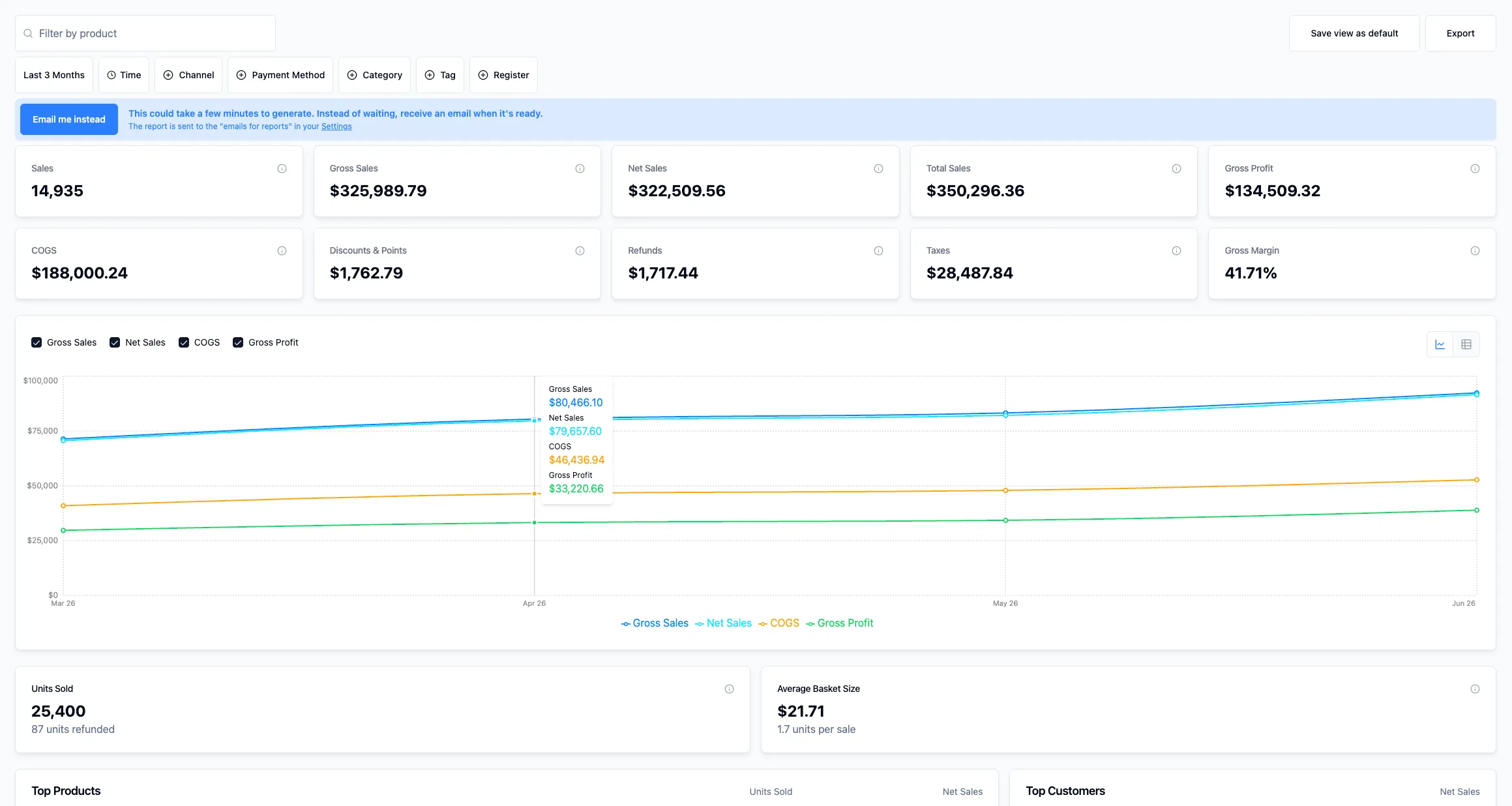
Carrying too many SKUs is one of the most common ways liquor stores bleed cash. Those extra products tie up money and take up shelf space, which is why having a process for regularly auditing your inventory and cutting products is worth building into how you run your store.
This article breaks down the process for doing that.
What is SKU rationalization?
SKU rationalization is an inventory management process where you evaluate every product you carry against a consistent set of criteria, typically sales velocity, margin, and shelf productivity, and make deliberate decisions about what to keep, what to cut, and what to reorder more aggressively.
Every SKU on your shelf occupies space and ties up capital, so each one needs to be generating a return, whether through volume, margin, or both.
Start with sales velocity
Sales velocity measures how quickly a product sells over a given period. It's the most important number in your inventory decisions.
The basic formula goes like this:
Sales Velocity = Units Sold ÷ Days in Period
A bottle of Tito's that sells 14 units in 7 days has a velocity of 2.0 units/day. A craft gin that sells 2 units in 60 days has a velocity of 0.03 units/day.
That gap matters enormously for how you allocate shelf space, how much you order, and how often you reorder.
Velocity alone, however, doesn't tell the full story. A product moving fast at a razor-thin margin may be less valuable than one moving moderately at a strong margin, so you need to run both numbers together.
High velocity combined with a healthy margin is your core assortment. Low velocity combined with low margin is what you cut.
Build your four-quadrant framework
Plot every SKU across two axes: velocity (horizontal) and gross margin (vertical). Every product lands in one of four buckets:
Quadrant 1: High Velocity, High Margin These are your core moneymakers. Keep them fully stocked at all times, give them prime shelf placement at eye level and on end caps, and use your volume with these products as leverage when negotiating purchase pricing with your reps.
Quadrant 2: High Velocity, Low Margin These are your traffic drivers. Well-known call brands, popular mixers, and price-competitive wine. Customers come in for these, so you need them, but you don't need deep variety within this category. One or two SKUs per segment is enough.
Quadrant 3: Low Velocity, High Margin These are your specialty and premium products. A $90 Japanese whisky that sells 3 bottles a month might still be worth carrying if the margin per unit justifies the shelf space, but evaluate each one on its own merits. Keep your depth shallow and don't over-order.
Quadrant 4: Low Velocity, Low Margin These need to go, as they're costing you in tied-up cash, occupied shelf space, and the overhead of managing them. Return them to your distributor if possible, discount them to clear, or liquidate them.
{{DEMO_CTA="/components"}}
How to know what to cut
Run a 90-day sales report and sort by units sold, ascending. The products at the bottom of that list are your candidates for removal.
Before you cut, ask four questions:
- Has it ever sold well? If it had a strong season (e.g., a liqueur that moves during the holidays), don't cut it. Just manage it seasonally.
- Is it a special order item a specific customer reliably requests? Special orders can be handled without carrying permanent stock. Note the customer, order on demand.
- Is it part of a brand family where other SKUs are top performers? Sometimes a slow SKU adds legitimacy to the shelf set. But be honest about whether that's true or just a rationalization.
- Has it been given a fair shot? A product buried on the bottom shelf with no visibility hasn't really been tested. Adjust placement before you cut.
If the answer to all four is no, cut it. Return it to your distributor if possible, discount it to clear, or liquidate it. The cash is more valuable than the shelf space.
Reorder points: Stop running out of the products that sell
One of the most damaging things a liquor store can do is go out of stock on high-velocity items. Not only do you lose out on the immediate sale, but you also send a message to your customers that you aren’t reliable.
Set reorder points using velocity data:
Reorder Point = (Daily Velocity × Lead Time in Days) + Safety Stock
Example: Tito's sells 2 units/day. Your distributor delivers in 3 days. You want 4 bottles of safety stock. Your reorder point is (2 × 3) + 4 = 10 bottles. When your count hits 10, you order.
Do this calculation for every A-tier SKU. Your POS systems should track this and alert you automatically, which means you're not relying on someone coincidentally noticing a shelf is getting low.
Use your data when buying
Once you have velocity data working for you, it changes how you approach purchasing:
Stop buying on rep recommendations alone. Reps have quotas; they'll push what they need to move. Let them bring ideas, but verify against your own sell-through data before committing to a new SKU or a large quantity deal.
Consolidate your supplier relationships. Fewer distributors means better volume leverage, fewer purchase orders to manage, and less delivery complexity. If two distributors carry the same product, you can price-shop, but don't split order your orders unless the savings are significant.
Use deal pricing strategically. When a distributor offers a discount on a high-velocity item, buy in. When they offer a deal on something you barely sell, pass. The discount isn't a reason to stock something. Movement is.
Review your assortment quarterly. Velocity changes seasonally, culturally, and with trends. A hard seltzer that was a Q3 juggernaut might flatline in Q1. Build a calendar reminder to re-run your quadrant analysis every 90 days and make adjustments.
The numbers that should concern you
A few benchmarks to use as a reality check:
- Inventory turnover for a well-run liquor store typically falls between 6 and 12 times per year. If you're below 6, you're carrying too much dead stock.
- Dead stock (product that hasn't sold in 90+ days) is a direct drag on cash flow. Anything beyond 30 days of supply for a slow mover is worth flagging.
- Out-of-stock rate on your top 20 SKUs should be close to zero. If it's not, your reorder points need work.
The final takeaway
SKU rationalization should be treated less as a one-time project, but more of a regular operating process.
The stores that do it well run tighter margins, turn inventory faster, keep customers loyal because they're always in stock on what matters, and free up cash to invest in the products that actually build the business.
The data you need is sitting in your sales history, and the most practical way to access it is through your POS system. A good one surfaces velocity, margin, and inventory trends without you having to pull reports manually or piece things together from a spreadsheet.
If you're not already getting that from your current setup, it's worth looking at Santé POS, a system built specifically for liquor and wine stores, with features that are directly relevant to everything covered in this article:
- Sales Dashboard: a real-time view of sales and inventory trends in one place
- Detailed Reporting: breaks down performance by product so you can run velocity and margin analysis without extra work
- Smart Reordering: helps you build purchase orders based on actual sell-through data rather than gut feel
- AI-Powered Receiving: scans invoices automatically so your stock levels stay accurate after every delivery
- Spot Check: lets you verify and update inventory on the shop floor from a mobile app, without being tied to the register
If you feel like you're not getting enough from your current POS system, it's time to switch to one that actually works for you and helps you maximize your profits. Schedule a demo today.
Your submission has been received!