How to Minimize Inventory Losses in Your Liquor Store
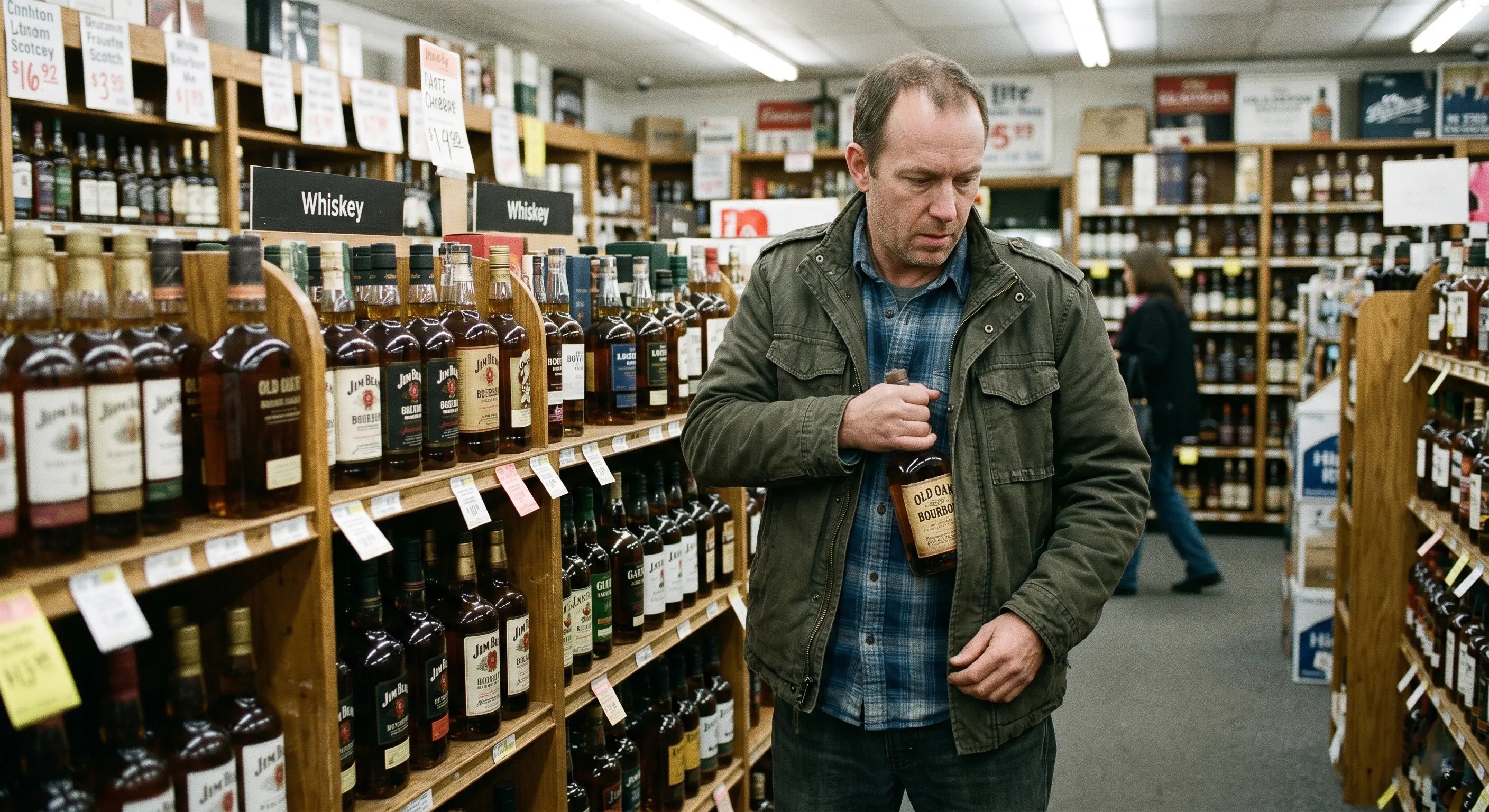
Running a liquor store means carrying high-value, tightly regulated products on your shelves every day. That makes shrinkage one of the most expensive problems an independent liquor store owner faces.
The industry average for retail shrinkage sits at around 1.6% of total sales. For a store doing $1 million a year, that's roughly $16,000 disappearing from your bottom line. At $2 million, you're looking at $32,000 gone before you've paid a single bill. And because shrinkage accumulates quietly, most owners don't feel the full weight of it until they sit down with their numbers.
The causes of those losses can be grouped into a few distinct categories, all of which we'll cover in today's article.
The Three Main Sources of Liquor Store Shrinkage
1. Customer Theft (Shoplifting)
Alcohol is one of the most shoplifted product categories in retail, mostly because premium spirits are compact, high-value, and easy to resell, which makes them an attractive target for both opportunistic theft and organized retail crime.
Virginia ABC stores alone reported $808,371 worth of alcohol stolen in the first half of 2024, a 46.5% increase over the same period the year prior.
For an independent store without a dedicated loss prevention team, most theft goes undetected until a count comes up short, often weeks after the fact.
Here’s what you can do to prevent shoplifting:
- Place high-value bottles strategically. Keep premium spirits and the most theft-prone items in higher-visibility areas of the store, closer to the register or behind a counter where staff interaction is required.
- Use shelf-level loss prevention fixtures. Locking display cases, bottle caps that require a key to remove, and cable locks on high-value items add friction that deters casual theft without significantly degrading the shopping experience.
- Review your store layout with theft in mind. Blind spots are where most shoplifting happens. Mirrors, camera placement, and layout adjustments can eliminate a surprising number of these.
- Train staff to actively engage with customers. A quick "Can I help you find something?" serves two purposes: it's good customer service, and it signals to anyone with bad intentions that they've been noticed. This simple act can often be enough to deter shoplifters from stealing the items that they have intended to take.
- Reconcile high-theft SKUs frequently. Rather than waiting for a full count to catch discrepancies, spot-count your most stolen items weekly. If a particular bottle keeps coming up short, you can spot it quickly and adjust your placement or security measures.
2. Employee Theft
Employee theft accounts for about a third of retail shrinkage across the industry. Estimates typically put it at around 28–35% of total losses.
Employee theft in a liquor store takes several forms:
- Straight-up product theft — bottles walking out the back door, in a bag, or in a jacket at the end of a shift.
- Register manipulation — giving unauthorized discounts, voiding transactions after cash is received, or skimming from the till.
- Collusion with customers — ringing items at a lower price or failing to ring an item for friends, family, or accomplices.
- Receiving fraud — signing off on deliveries without verifying them, or falsely recording damaged goods to pocket product.
What you can do:
- Implement dual control on deliveries. Require two employees to verify receiving, or have a manager spot-check incoming orders against invoices. A single employee checking in their own orders is an open door for receiving fraud.
- Restrict discount and void authority. Limit which employees can apply discounts, issue refunds, or void transactions. Every override should be logged with an employee ID and reviewed regularly by a manager.
- Audit the register against actual sales. Cash drawer reconciliation at the end of every shift (not just at the end of day) makes it far easier to identify when a discrepancy occurred and whose shift it fell under.
- Monitor back-of-house access. Storage rooms and receiving areas are common points of theft. Limit who has access, keep them organized so missing product is obvious, and install cameras if the layout allows.
- Use employee-level sales and discount reporting. A liquor store POS system that tracks transactions by employee gives you the data to notice patterns of potential theft.
- Hire carefully. Background checks and reference calls are standard practice, but pay attention to how candidates talk about accountability and past employers during the interview.
The biggest deterrent to employee theft is the perception that discrepancies will be noticed quickly. When employees know that counts happen regularly and that the numbers get reviewed, the opportunity to steal quietly disappears.
{{DEMO_CTA="/components"}}
3. Vendor and Delivery Fraud
This one catches many liquor store owners off guard, partly because the relationship with distributors often feels collaborative. But short deliveries, billing errors, and outright misrepresentation are real and recurring problems in beverage alcohol distribution.
Common scenarios include:
- Short shipments — you're invoiced for 10 cases, but only 9 arrive. If no one checks carefully upon receiving, you pay for a product you never got.
- Substitutions — a specific SKU is out of stock, so a different item is dropped off without discussion, but you're still billed for the original.
- Pricing discrepancies — the invoice price doesn't match the agreed price, especially for promotional pricing or volume deals that weren't clearly documented.
- Damaged goods not credited — product arrives damaged or broken, you note it, but the credit never makes it onto the next statement.
None of this requires assuming your distributor rep is dishonest, as errors happen mostly in warehouses. But without a disciplined receiving process, you absorb every one of those errors.
What you can do:
- Count every delivery against the invoice before signing. This sounds obvious, but under the pressure of time it's common to skip this verification. You need to make it a non-negotiable step.
- Note exceptions on the delivery receipt. If something is short, wrong, or damaged, write it on the paperwork before the driver leaves. "Received as noted" is a meaningless signature if the exceptions aren't documented.
- Reconcile invoices to purchase orders. If you created a purchase order before the delivery, compare it to the invoice line by line. Discrepancies that show up here are almost always chargeable errors.
- Track credits and follow up on them. When you report a problem, create a record and follow up on the next statement. Credits that aren't tracked are credits that get forgotten.
- Review pricing regularly. Set aside time quarterly to compare what you're being charged to what you actually agreed to pay. Price creep on individual SKUs can add up fast across a full order book.
How Santé POS Helps You Fight Shrinkage
Manual spreadsheets and old retail software can't give you the visibility you need to catch losses early.
Santé POS is built specifically for liquor stores, and the features that address loss prevention are built into how the system works day-to-day:
Employee-level transaction tracking makes register manipulation visible. With flexible permissions and detailed reporting, managers can monitor transaction activity by employee and spot unusual patterns before a small problem becomes a large one.
AI invoice scanning reduces receiving fraud and vendor errors by automatically and accurately converting distributor invoices into inventory entries.
Spot Check mobile counting lets you count high-risk SKUs as frequently as you need to without disrupting operations. Walk the aisle with your phone, scan items, and see variances in real time. Counts are tied to employee logins, so if a discrepancy shows up in a section, you know exactly who counted it and when.
Shrinkage and variance reporting surfaces which SKUs are consistently coming up short, which shifts are seeing the most discrepancies, and where your losses are concentrated. That kind of visibility turns loss prevention from a reactive scramble into a proactive discipline.
If shrinkage is quietly eating your margins, the first step is knowing where it's coming from. Santé gives you the tools to find out and to stop it.
Book a demo to see how Santé POS can help protect your inventory.
Your submission has been received!